Hyssop in the Bible: Ancient Plant, Timeless Symbolism
Hyssop in the Bible: Ancient Plant, Timeless Symbolism
Key Takeaways
- Hyssop appears nearly a dozen times across the Bible, primarily as a divine instrument for purification rituals, cleansing ceremonies, and symbolic transitions between impurity and holiness.
- During the first Passover, God specifically commanded Israelites to use hyssop branches to apply sacrificial lamb’s blood to doorposts, establishing its role as a bridge between sacrifice and salvation.
- David’s plea in Psalm 51:7, “Purge me with hyssop, and I shall be clean,” transformed the understanding of repentance by applying physical purification rituals to moral cleansing.
- John’s Gospel deliberately highlights hyssop at Jesus’ crucifixion, creating a theological connection between Christ as the ultimate Passover lamb and the Old Testament purification rituals.
- Syrian oregano (Origanum syriacum) is a proposed identification for biblical hyssop. Exodus describes what the Israelites did with a bunch of the plant and leaves its exact species open.
What Is Hyssop and Why It Appears in the Bible
At the first Passover, Moses tells the elders to take a bunch of hyssop, dip it in blood and mark their doorways (Exodus 12:21–23). The Hebrew name for the plant is ezov.
Other passages put hyssop to different uses. In Numbers 19:18, a person dips it into water for sprinkling. In 1 Kings 4:33, hyssop growing from a wall is an example of the plants Solomon knew.
The Enduring Symbolism of the Hyssop Branch in Scripture
Hyssop functions as what scholars call a “theological bridge”, a physical element that connects abstract spiritual truths to tangible human experience. The plant itself doesn’t possess inherent spiritual power: rather, it serves as the divinely appointed instrument through which cleansing and atonement are applied.
In ancient Near Eastern understanding, hyssop represented more than purification, it symbolized the boundary between death and life, between impurity and holiness. When blood was applied with hyssop during the first Passover, it wasn’t merely a practical application method: it represented the transfer of sacrificial protection to the household.
The symbolism reaches its culmination when the Apostle John records that Jesus, the ultimate Passover Lamb, receives sour wine from a hyssop branch before declaring “It is finished” (John 19:28-30). This isn’t coincidental, John, writing decades after the crucifixion, deliberately highlights how Jesus’ sacrifice completes the symbolic pattern established in the Old Testament.
Why the Biblical Use of Hyssop Still Matters Today
The hyssop branch offers a profound lesson about how God works, not through elaborate or impressive means, but through common elements of creation repurposed for divine ends. This principle extends far beyond ancient ritual.
When David writes “Purge me with hyssop, and I shall be clean” (Psalm 51:7), he’s not merely being poetic. He’s invoking the entire sacrificial system that his audience would have immediately recognized. For the modern reader who misses this connection, David’s plea loses much of its power.
Hyssop reminds us that spiritual transformation often comes through humble, ordinary channels. The plant itself hasn’t changed in thousands of years, you could grow the same species in your garden today. What has changed is our recognition of how God infuses common elements with sacred purpose.
Understanding Hyssop in the Bible
The biblical writers weren’t botanists, and ancient Hebrew lacked the precision of modern scientific classification. This creates some genuine scholarly debate about exactly which plant the Bible refers to as ‘ezov. The identification matters because it affects how we understand the practical aspects of the rituals described.
Botanical Identity: What Plant Was Referred to as Hyssop?
Syrian oregano, also called Syrian marjoram (Origanum syriacum), is a leading candidate for biblical ezov. Garden hyssop (Hyssopus officinalis) is a different species that shares the English name. The Bible Museum in Münster explains the proposed oregano identification.
The Greek translation of Exodus uses the word hyssōpos. That tells us how the ancient translators named the plant. It does not settle which modern botanical species they had in mind.
Symbolic and Ritual Functions of the Hyssop Branch
Across Scripture, hyssop serves three primary functions:
- As an applicator of blood: Most prominently during the first Passover when God commanded, “Take a bunch of hyssop, dip it in the blood that is in the basin, and touch the lintel and the two doorposts with the blood” (Exodus 12:22). The hyssop branch transferred the lamb’s blood to the entrance of Israelite homes, protecting them from the final plague.
- As a purification instrument: In Levitical law, hyssop was used alongside cedar wood and scarlet yarn in purification rituals for skin diseases (Leviticus 14) and ceremonial cleansing. The ritual for cleansing a defiled house involved “cedar wood, hyssop, scarlet yarn, and the live bird” dipped in fresh water (Leviticus 14:49-52).
- As a symbol of spiritual renewal: By the time of David’s writing in Psalm 51:7, “Purge me with hyssop, and I shall be clean: wash me, and I shall be whiter than snow,” hyssop had become theological shorthand for divine purification. David wasn’t literally requesting a hyssop branch, he was invoking the entire sacrificial system through this symbol.
These functions converge most powerfully in the New Testament when John writes of Jesus’ crucifixion: “A jar full of sour wine was standing there. So they put a sponge full of the wine on a branch of hyssop and held it to his mouth” (John 19:29). John, who carefully selected theological details, connects Jesus’ sacrifice to the Passover and purification rituals through this seemingly minor detail about a hyssop branch.
Hyssop in Major Scriptural References
To truly understand hyssop’s significance, we need to examine the key passages where it appears. Each reference builds upon previous ones, creating a theological tapestry that spans from Exodus to the Gospels.
Hyssop During the Passover in Exodus 12:22
The first and most foundational reference to hyssop appears in Exodus 12:22, when God institutes the Passover ritual:
“Take a bunch of hyssop, dip it in the blood that is in the basin, and touch the lintel and the two doorposts with the blood in the basin. None of you shall go outside the door of your house until morning.”
The lintel is the beam across the top of the doorway. Moses names it alongside both doorposts so the reader can picture where the blood goes. The bunch of hyssop carries the blood from the basin to the entrance.
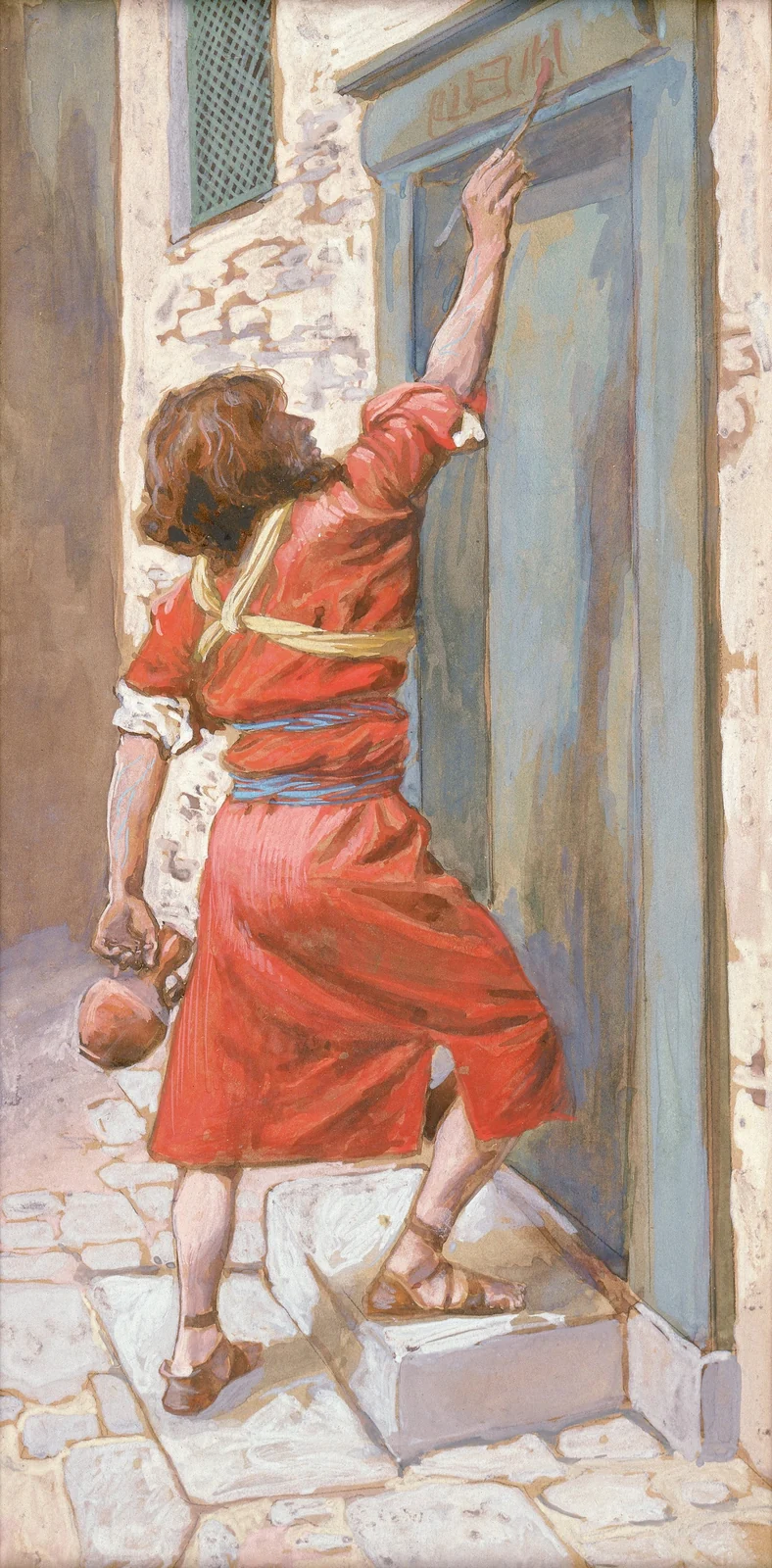
Exodus 12:23 explains why the marked entrance matters. The Lord will see the blood, pass over that doorway and keep the destroyer from entering the house.
David’s Plea: ‘Purge Me With Hyssop’ in Psalm 51
By the time David writes Psalm 51 after his sin with Bathsheba, hyssop had become embedded in Israel’s religious consciousness through centuries of sacrificial practice. When he pleads in verse 7:
“Purge me with hyssop, and I shall be clean: wash me, and I shall be whiter than snow,”
He’s not speaking abstractly. The Hebrew word translated “purge” (teḥatte’eni) is directly connected to the sin offering (ḥatta’t). David is essentially saying: “Apply to me the purification ritual prescribed in the Law of Moses, the same one that uses hyssop to sprinkle blood and water for cleansing.”
This isn’t mere poetry. David, raised in the sacrificial system, would have witnessed countless purification rituals involving hyssop. His plea demonstrates how deeply the symbolic meaning had penetrated Israel’s understanding of forgiveness.
Psalm 51:7 and the Cleansing Rituals of Ancient Israel
To fully appreciate David’s reference to hyssop, we need to understand the purification rituals he had in mind. The most relevant appears in Numbers 19, where a red heifer was sacrificed, and its ashes mixed with water to create “water for cleansing” (mei niddah):
“A clean person shall take hyssop, dip it in the water, and sprinkle it on the tent, on all the furnishings, on the persons who were there, and on whoever touched the bone, the slain, the corpse, or the grave” (Numbers 19:18).
This ritual addressed both ceremonial impurity and moral cleansing. When David asks to be purged with hyssop, he’s acknowledging that his sin with Bathsheba has made him spiritually unclean, as though he had touched death itself. He needs the full purification ritual that only God can provide.
In the psalm, the speaker asks God to cleanse him. Hyssop brings the action of sprinkling to mind, giving the prayer an image drawn from worship.
The Crucifixion Scene: Why Jesus Was Offered Hyssop
Perhaps the most theologically significant appearance of hyssop comes at the crucifixion. John specifically mentions that when Jesus said “I thirst,” the soldiers “put a sponge full of the wine on a branch of hyssop and held it to his mouth” (John 19:29).
John, writing decades after the other Gospel accounts, makes a deliberate choice to mention the hyssop, a detail absent in the synoptic gospels. By including this specificity, John creates a theological connection between Jesus’ sacrifice and the Passover lamb.
The timing is equally significant. After Jesus receives the sour wine from the hyssop branch, he declares “It is finished” and gives up his spirit. The presence of hyssop at this precise moment connects Jesus’ death to both the original Passover (where hyssop applied the lamb’s blood) and the purification rituals (where hyssop sprinkled the cleansing water).
This isn’t coincidental. John wrote with careful theological intention, showing how Jesus fulfills the patterns established in the Old Testament. The hyssop branch at the crucifixion becomes the instrument through which the final sacrifice is completed.
Spiritual and Theological Significance
Beyond its ritual applications, hyssop carries profound theological meaning that unites major biblical themes. Understanding these connections helps us see how Scripture builds consistent symbolism across diverse texts and centuries.
Cleansing, Atonement, and Spiritual Renewal
Hyssop stands at the intersection of three critical theological concepts: cleansing, atonement, and renewal. It’s never just about physical cleaning, it always points toward spiritual restoration.
In Leviticus 14, the cleansing ritual for skin diseases (often mistranslated simply as “leprosy”) required “the priest shall take the living bird with the cedar wood and the scarlet yarn and the hyssop, and dip them and the living bird in the blood of the bird that was slaughtered” (Leviticus 14:6). This complex ritual used hyssop alongside cedar (representing strength and permanence) and scarlet yarn (symbolizing blood and life) to effect complete restoration.
The pattern is consistent: blood must be applied to bring cleansing. Hyssop serves as the applicator, the bridge between sacrifice and salvation. This pattern reaches its fulfillment in Christ, whom Hebrews describes as establishing a better covenant: “For if the blood of goats and bulls, with the sprinkling of the ashes of a heifer, sanctifies those who have been defiled so that their flesh is purified, how much more will the blood of Christ…purify our conscience” (Hebrews 9:13-14).
Hebrews 9:13–14 recalls the ashes of a heifer when discussing purification. Later in the same chapter, Hebrews 9:19 explicitly names hyssop in its account of Moses sprinkling the book and the people.
Why ‘Hyssop and I Shall Be Clean’ Reshaped Repentance
David’s plea in Psalm 51:7, “Purge me with hyssop, and I shall be clean”, transformed Israel’s understanding of repentance. Before this psalm, purification rituals primarily addressed external or ceremonial impurity. David applies this physical ritual language to moral failure and internal corruption.
The Hebrew phrasing is powerful. “Purge me” (teḥatte’eni) shares the same root as the word for sin offering (ḥatta’t). David is essentially saying, “Apply to me the same purification ritual that the Law prescribes for physical impurity.”
What makes this revolutionary is that no explicit ritual existed in Torah for cleansing adultery and murder, David’s sins. By appealing to hyssop purification, David expresses faith that God’s cleansing power extends beyond the specific cases outlined in Levitical law. He trusts that the God who established these physical rituals of purification can apply their spiritual reality to his moral failure.
This understanding shaped how later generations approached repentance. No longer was spiritual cleansing limited to prescribed ritual cases, it became available for all forms of sin through genuine contrition and divine grace. The hyssop symbolized this transfer from external ritual to internal reality.
Centuries later, the prophet Isaiah would build on this concept: “Though your sins are like scarlet, they shall be like snow” (Isaiah 1:18), echoing David’s “I shall be whiter than snow” after the hyssop purification. The symbolic language of ritual cleansing became the primary way Israel understood spiritual restoration.
Comparative Faith Views on Hyssop
The significance of hyssop extends beyond any single theological tradition. Jewish, Christian, and historical interpretations offer complementary perspectives that enrich our understanding.
Jewish Rabbinical Commentary on the Use of Hyssop
Rabbinic sources offer fascinating insights on why God spe